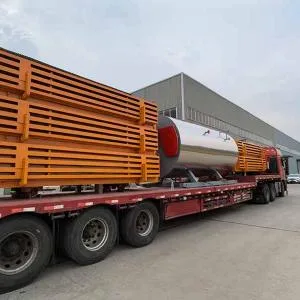
Henan Zhonglian Huazhu Machinery Equipment Co., Ltd.
AAC Panel Production Line Manufacturer
Turnkey equipment and engineering for reinforced AAC wall panel production, from reinforcement preparation and corrosion protection to casting, precision cutting, autoclaving, separation and packing.
REQUEST A PANEL PLANT PROPOSALComplete AAC Wall Panel Manufacturing Solution
An AAC panel production line shares the main mineral process of an AAC block plant, but panel manufacturing adds a controlled reinforcement system. Steel mesh must be welded to the specified geometry, protected against corrosion, assembled into cages and positioned accurately inside the mould before pouring. These operations affect panel strength, cover thickness, dimensional accuracy and production stability, so they must be engineered as part of the complete line rather than treated as an isolated workshop.
HUAZHU plans complete plants for wall panels, partition panels, roof or floor elements and combined block-and-panel production. The configuration is developed around annual capacity, panel length and thickness, reinforcement design, mould size, raw-material test results, local utility conditions and the required automation level. The supply scope can include process design, equipment manufacturing, plant layout, electrical control, installation guidance, commissioning support and operator training.
How the Reinforcement Process Works
1. Steel mesh welding
Coils or straight bars are cut and welded into mesh sheets according to the structural design. Wire diameter, spacing, overall dimensions and weld consistency are checked before the mesh moves forward. A stable welding station improves repeatability and reduces manual correction.
2. Corrosion protection
Clean mesh receives a compatible anti-corrosion coating. Surface preparation, coating concentration, immersion or spraying time, drainage and drying must be controlled so the protective layer is continuous without excessive buildup that could reduce bonding.
3. Cage assembly
Protected meshes are connected with spacers and cross bars to form the reinforcement cage. Fixtures help maintain cage width, cover distance and straightness. Each cage should be identified by panel type to prevent the wrong reinforcement from entering a mould.
4. Positioning in the mould
The cage is suspended or fixed in the mould using positioning frames. Alignment is verified before slurry pouring. During pre-curing, the frame must keep the cage stable so it does not float, twist or touch the mould surface.
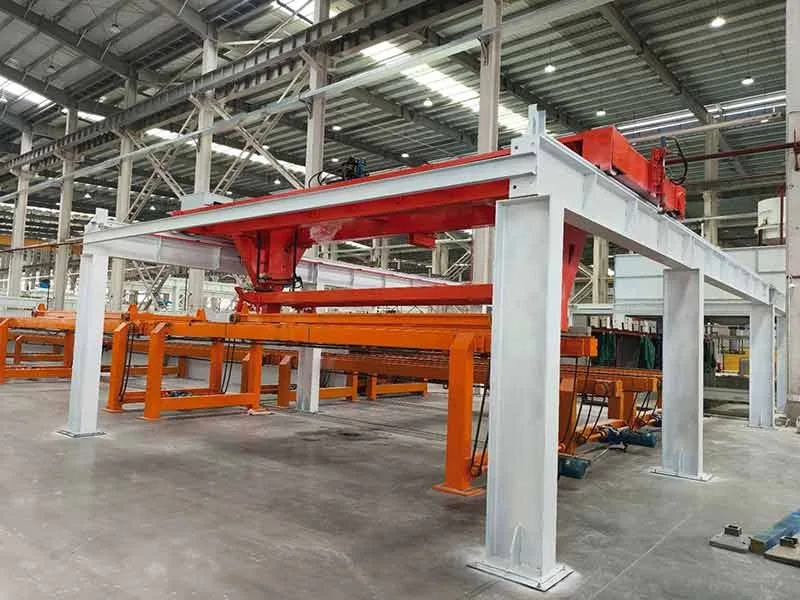
Full Production Process
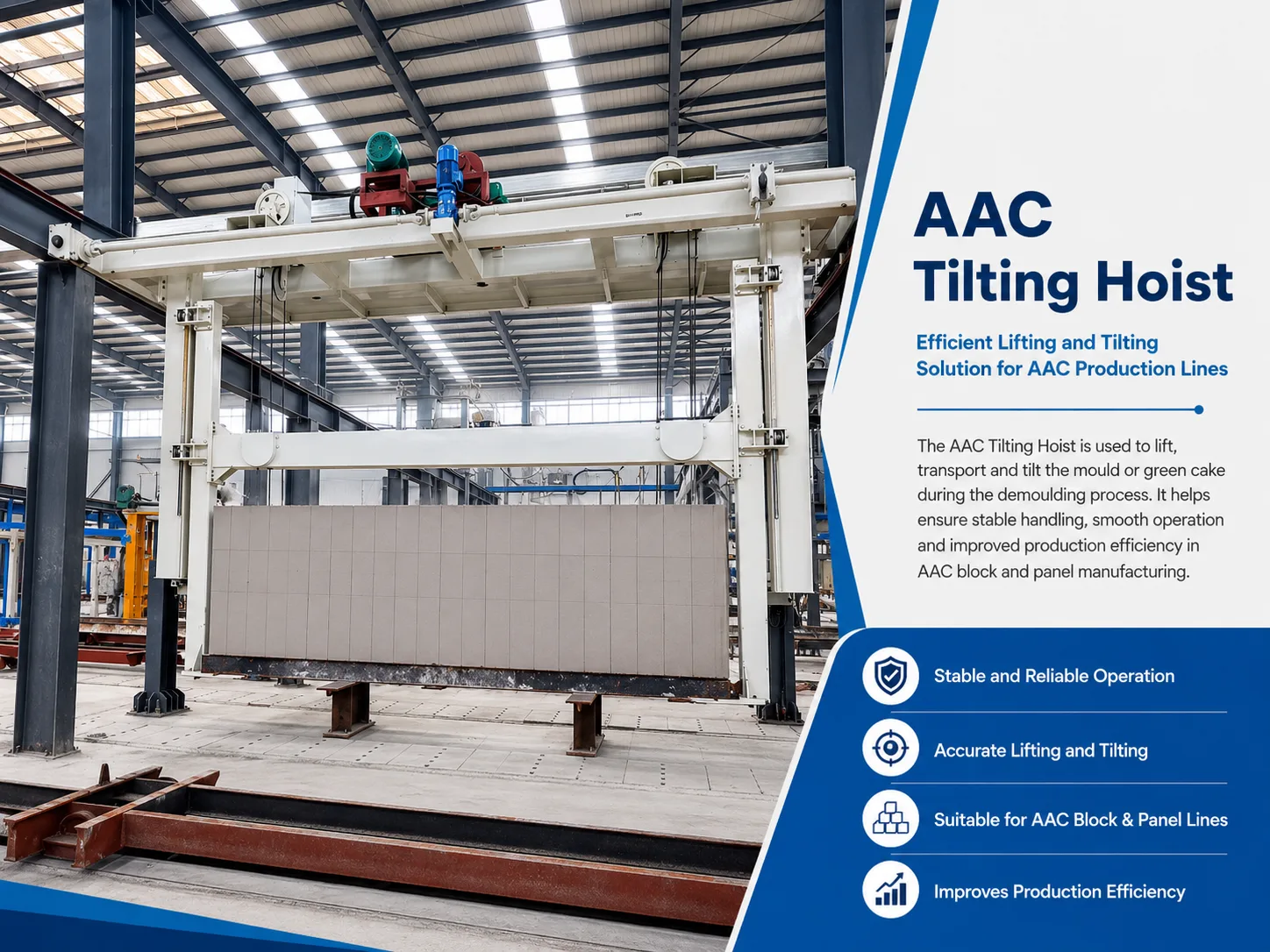
The mineral side begins with sand or fly ash preparation, cement, lime, gypsum and aluminum dosing. Materials are batched and mixed into slurry, then poured into moulds that already contain the positioned reinforcement cages. The cake rises and pre-cures until it reaches the correct cutting strength. A tilting hoist turns the mould and green cake, after which horizontal and vertical cutting wires create the specified panel dimensions, tongue-and-groove profiles and block sizes where required.
Cut products are loaded onto autoclave carts and cured with saturated steam. The autoclaving cycle develops the final calcium silicate structure and should be matched to raw materials, product density and panel thickness. After curing, products are separated carefully to protect edges and surfaces. Panels are inspected, grouped by specification, strapped or wrapped, labelled and transferred to the finished-product yard.
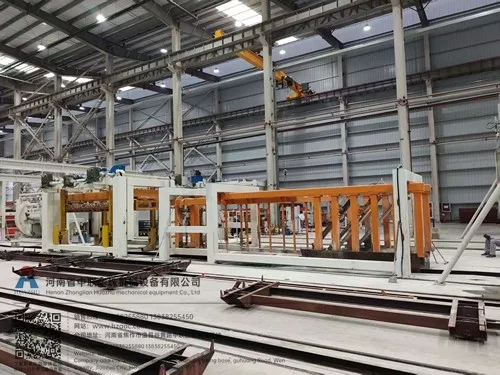
AAC Block Line vs AAC Panel Line
| Planning item | AAC block production | AAC panel production |
|---|---|---|
| Reinforcement | Normally not required for standard masonry blocks. | Requires mesh welding, coating, cage assembly, identification and positioning. |
| Product control | Focus on density, block dimensions, cutting accuracy and packaging. | Adds reinforcement cover, cage location, panel straightness, handling and structural test requirements. |
| Cutting system | Standard horizontal and vertical block cutting arrangement. | Must accommodate long elements, panel thicknesses, profiles and reinforcement locations. |
| Material handling | Blocks can be grouped into packs after separation. | Long panels require controlled lifting, support points and edge protection. |
| Workshop layout | Main mineral process and product yard. | Adds reinforcement workshop, coating/drying area, cage buffers and positioning route. |
| Quality records | Batch, density, strength and dimensional records. | Adds steel specification, cage design, coating, cover and panel-type traceability. |
A combined factory can share raw-material preparation, batching, casting, cutting, autoclaves and utilities, while allocating separate reinforcement and finished-product handling stations. Review our complete AAC production line approach when comparing shared equipment and expansion stages.
Typical Capacity Configurations
The following ranges are preliminary planning references. Actual equipment quantity depends on operating days, shifts, mould cycle, panel percentage, dimensions, density, raw materials and automation target.
| Annual capacity | Recommended production concept | Reinforcement area | Automation focus |
|---|---|---|---|
| 100,000 m³/year | Compact line for a focused regional panel and block range. | One coordinated welding/coating/assembly stream with buffer space. | Automatic batching and cutting; practical semi-automatic cage handling. |
| 150,000–200,000 m³/year | Flexible plant for several panel thicknesses and masonry blocks. | Dedicated reinforcement workshop with parallel preparation positions. | Recipe control, mould tracking and mechanized transfer. |
| 300,000 m³/year | Industrial line with higher mould circulation and autoclave utilization. | Multiple welding or assembly stations and planned cage buffers. | Central control, automatic transport and production data collection. |
| 400,000 m³/year | High-output combined line with balanced cutting and curing capacity. | Parallel reinforcement flow arranged by panel family. | Automated handling, identification and coordinated scheduling. |
| 500,000 m³/year | Large-scale plant designed for stable market demand and multiple shifts. | High-throughput reinforcement center with redundancy and inspection zones. | Integrated control, traceability and reduced manual transfer. |
For investment comparison, see the AAC plant cost guide. It explains why land, civil works, utilities, product mix and local construction conditions should be evaluated together with equipment price.
Land, Power, Steam, Labour and Automation
Land must provide clear one-way movement from raw-material receiving to finished-product dispatch. A panel factory also needs a dry reinforcement workshop, coating and drying zone, cage storage, safe lifting aisles and sufficient turning space for long products. The final arrangement should coordinate roads, cranes, rail tracks, foundations, maintenance access, boiler room, laboratory and future expansion. Use the AAC plant layout guide to prepare site dimensions and utility information before detailed engineering.
Installed electrical load depends on grinding, mixing, cutting, welding, cranes, compressors, pumps and packaging equipment. Steam demand depends on autoclave quantity, cycle design, insulation and heat recovery. Water quality and supply stability affect both production and boiler operation. Labour requirements depend heavily on material feeding, cage preparation, product handling and shift pattern; automation should target repetitive transfer, accurate dosing and traceability while retaining safe manual access for inspection and maintenance.
Before quotation, HUAZHU normally reviews the intended capacity, operating days, panel-to-block ratio, product sizes, raw-material analysis, available voltage, fuel type, land drawing and local labour conditions. This allows the process configuration and utility proposal to be matched to the project instead of copied from a generic plant.
Quality Control for Reinforced AAC Panels
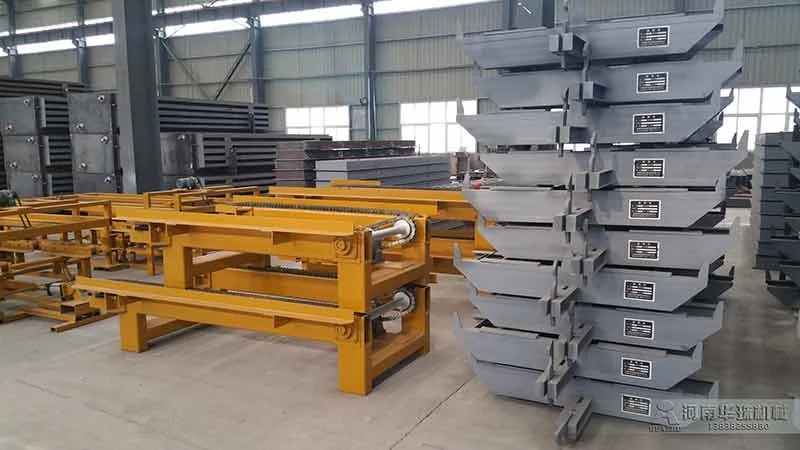
Incoming steel should be verified against the approved specification. Mesh dimensions and welds are inspected before coating; coating preparation and drying are recorded; assembled cages are checked against drawings; and cage position is verified before casting. Mineral raw materials, slurry density, temperature, rising behaviour and pre-curing strength are monitored for each production batch.
After cutting and autoclaving, the plant checks panel length, width, thickness, straightness, surface condition and reinforcement cover according to the applicable product standard and customer specification. Handling procedures are also part of quality control: lifting clamps, supports, stacking height and transport restraints must suit the panel length and strength. A laboratory plan should be agreed for density, compressive strength, drying shrinkage, thermal performance and any structural tests required by the destination market.
For a practical example of matching product mix, layout and expansion planning, read the Central Asia AAC plant planning case article.
Equipment Selection, Line Balancing and Project Delivery
Reliable output depends on balancing every process rather than purchasing the fastest individual machine. The grinding and slurry system must supply stable material to the batching section; mould circulation must match pouring and pre-curing time; the cutting cycle must keep pace with cake arrival; and autoclave loading must support the selected curing schedule. On the panel side, welding, coating, drying, cage assembly and positioning must deliver the correct reinforcement before each mould reaches the pouring station. If one of these steps is undersized, expensive downstream equipment will wait and the nominal plant capacity will not be achieved.
Equipment selection should also consider planned maintenance. Critical drives, pumps, cutting wires, sensors, lifting components and control hardware need safe access and a practical spare-parts plan. Buffer positions can allow production to continue during routine adjustments, while clear bypass and isolation procedures improve safety. HUAZHU reviews the expected shift pattern and local maintenance capability when recommending manual, semi-automatic or fully automatic transfer systems.
A turnkey delivery is normally divided into engineering, manufacturing, factory inspection, shipping preparation, site installation guidance, commissioning and production support. Before manufacturing, the customer and supplier should confirm the process flow, equipment list, interfaces, foundation loads, electrical conditions, piping responsibilities and acceptance criteria. During commissioning, recipes and operating parameters are adjusted with the customer's raw materials. Trial production should cover the main panel sizes and reinforcement designs, followed by operator training for normal operation, changeovers, quality checks, troubleshooting and preventive maintenance.
Commercial evaluation should compare the complete scope rather than the headline machine price. Check whether reinforcement equipment, laboratory instruments, cranes, rails, moulds, autoclave carts, electrical cabinets, installation tools, spare parts, documentation and service are included. Also identify customer-supplied items such as buildings, foundations, boiler, transformer, water treatment, compressed air, cables and pipelines. A clear responsibility matrix reduces changes during construction and gives investors a more realistic total project budget and schedule.
AAC Panel Production Line FAQ
What is the main difference between an AAC panel plant and an AAC block plant?
A panel plant adds steel mesh welding, corrosion protection, cage assembly, cage positioning and long-product handling. The mineral preparation, casting, cutting and autoclaving systems can often be shared with block production.
Can one production line manufacture both AAC blocks and panels?
Yes. A combined line can share major process equipment when mould size, cutting configuration, reinforcement workflow, curing capacity and production scheduling are planned together. The panel percentage and product sizes should be defined before equipment selection.
What information is needed for an accurate proposal?
Provide the destination country, target annual capacity, panel and block sizes, expected product mix, raw-material analysis, land dimensions, voltage, boiler fuel, operating shifts and preferred automation level.
Why is reinforcement corrosion protection necessary?
The protective coating helps isolate the steel from the alkaline and porous AAC environment while maintaining suitable bonding. Surface preparation, coating formulation, application and drying must follow the approved production specification.
How much land, power and steam does an AAC panel line need?
There is no reliable single figure for every plant. Requirements depend on capacity, raw materials, grinding system, mould cycle, autoclave arrangement, panel workshop, product yard and automation. HUAZHU calculates project-specific utility and layout references after reviewing these inputs.
What support is available after equipment delivery?
The project scope can include layout and foundation guidance, installation supervision, commissioning, operator training, production trials, maintenance guidance and spare-parts planning. Confirm the required service scope in the commercial contract.
Request a Customized AAC Panel Plant Proposal
Send your country, required annual capacity, panel dimensions, block-to-panel ratio, raw materials and land size. HUAZHU will prepare a suitable process, equipment, layout and utility proposal.
200 m³/day AAC Block Production Line