Henan Zhonglian Huazhu Machinery Equipment Co., Ltd.
For a new AAC project in Kazakhstan, Uzbekistan, Russia or another Central Asian market, the factory layout is more than a drawing that shows where equipment will stand. It is the operating map for the entire investment. A practical AAC plant layout must connect raw-material preparation, batching, casting, pre-curing, cutting, autoclaving, finished-product handling and dispatch without creating unnecessary crossings, bottlenecks or maintenance risks.
Investors often begin by asking for an AAC production line price. That is understandable, but the most reliable starting point is to define the product, target capacity, available land, raw materials and utility conditions. Once these factors are clear, the equipment arrangement can be designed around the project rather than forced into an unsuitable building. A broader AAC plant investment review should connect the layout with construction, utilities, staffing, logistics and the expected sales market.
Why AAC plant layout matters to the investment decision
AAC blocks and AAC panels share many process principles, but they do not always create the same handling, storage and dispatch requirements. Block production usually requires efficient movement from cutting to curing and then to packing or loading. Panel production may require additional attention to casting dimensions, reinforcement-related operations, lifting points, finished-product protection and vehicle access. A combined concept must keep these flows coordinated while allowing each product area to operate safely.
A well-prepared layout helps an investor answer practical questions before construction begins:
- Can trucks enter and leave without crossing the main production route?
- Are raw-material receiving, storage and batching located close enough to reduce transfer distance?
- Does the cutting and handling area have enough working and maintenance clearance?
- Can autoclave foundations, rails, doors and transfer tracks be built accurately?
- Is there room for finished products, packaging, quality checks and future expansion?
- Can operators, maintenance teams and visitors move through the plant without entering hazardous working zones?
These questions influence civil works, steel-structure design, crane coverage, utility routing, staffing and the future cost of production. Layout decisions made early are usually less expensive to change than foundations, rails and building openings changed after construction.
Start with the product and the market, not with a standard drawing
The correct layout begins with a project brief. For an overseas AAC plant investment, the brief should identify the target market, local building applications and the first products that the factory will sell. A customer focused on residential blocks may prioritize stable block handling and fast dispatch. A customer developing a precast or wall-system business may require an AAC panel production line and a different finished-product zone.
For Central Asian projects, the planning discussion should also consider road access, seasonal weather, available construction contractors, local fuel and power conditions, and the distance between the factory and customers. The purpose is not to assume that every project has the same climate or infrastructure. The purpose is to make the layout responsive to the real site.
HUAZHU normally needs the following information before preparing a project-specific concept:
- Country and proposed factory location;
- planned annual capacity and expected production schedule;
- AAC blocks, panels or both;
- available raw materials and their physical form;
- land dimensions, building limitations and truck access;
- available electricity, water, steam or fuel conditions;
- preferred level of automation and packaging method;
- local requirements for installation, commissioning and after-sales support.
Arrange the process in a clear material-flow sequence
A practical AAC block production line normally follows a connected sequence: raw-material storage and preparation, batching and mixing, casting, pre-curing, cutting, removal or handling of the green cake, autoclaving, finished-product handling and dispatch. The exact equipment selection depends on the product and process design, but the movement logic should remain easy to understand.
Raw materials should arrive at a receiving area that is accessible to trucks and separated from finished-product traffic. Storage and preparation should be positioned so that material can reach the batching area with a predictable route. Batching, mixing and casting should be close enough to reduce unnecessary transfer while retaining space for inspection, cleaning and maintenance.
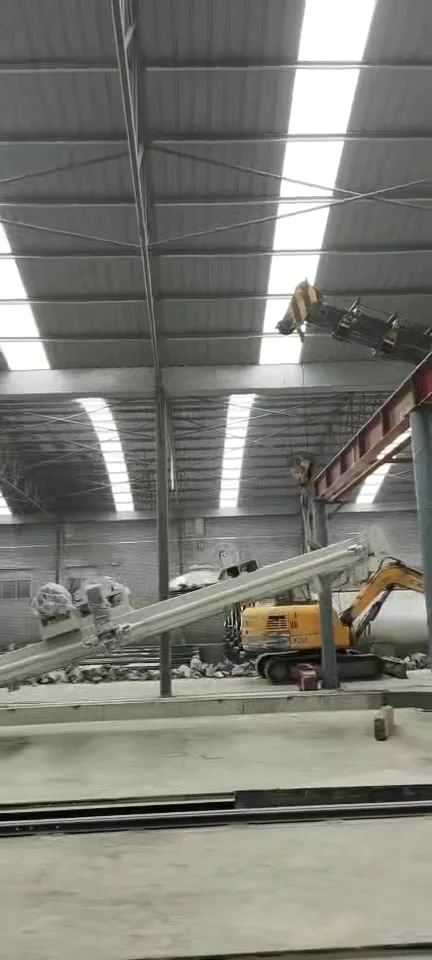
The cutting zone deserves special attention. Cutting machines need working clearance around the frame, lifting or turnover equipment needs room to operate, and rails or transfer systems must remain straight and accessible. The layout should also provide a logical route for rejected or damaged green cakes so they can be handled without interrupting normal production.
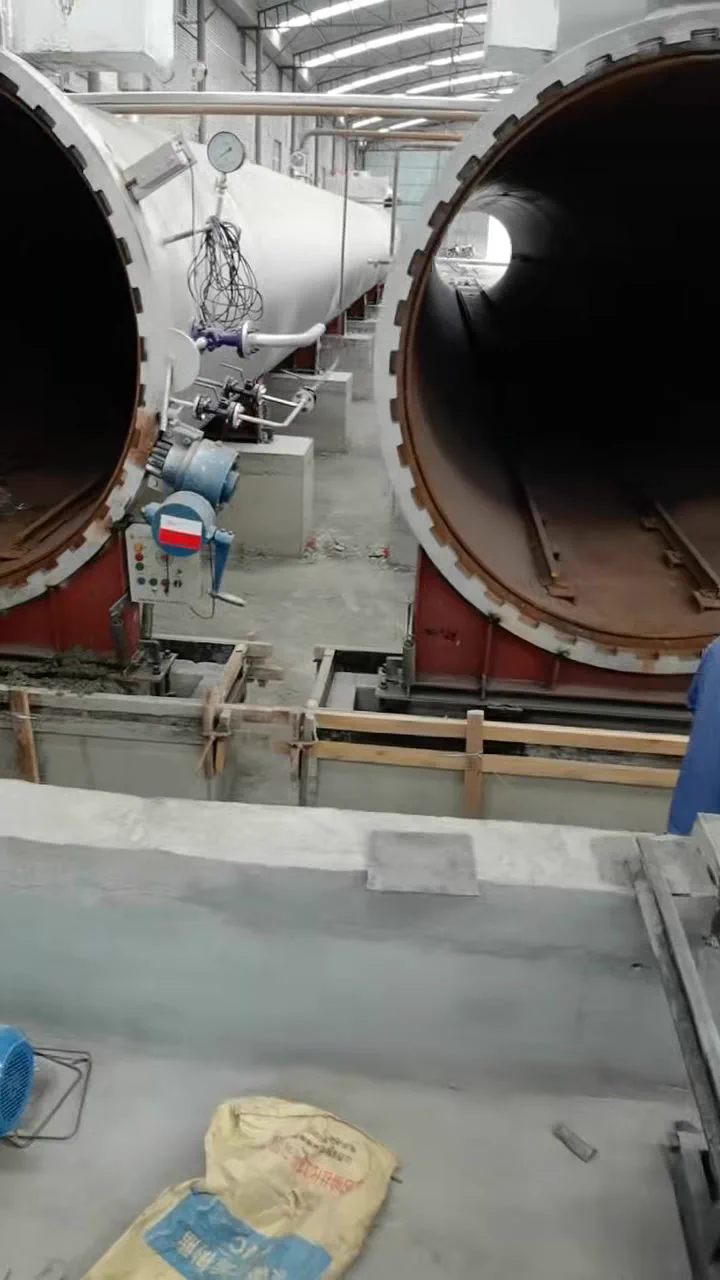
After cutting and related handling, the autoclave section becomes the link between green-cake preparation and finished-product quality. Rail alignment, foundation accuracy, door clearance, transfer tracks and safe access should be reviewed together. The autoclave section should not be treated as an isolated row of cylinders; it is a working area connected to the upstream and downstream logistics of the plant.
Plan the autoclave section around access and safety
Autoclaves require accurate civil and mechanical coordination. The foundations, rails, transfer route, door-opening area and adjacent service space should be reviewed before the building structure is finalized. A layout that fits the equipment dimensions but leaves no room for inspection or repair is not a complete layout.
Operators also need clear visibility of the transfer route and sufficient access to valves, motors, controls and other service points. The exact safety measures must follow the applicable local regulations and the equipment documentation. At the planning stage, however, the principle is simple: the autoclave area should support controlled movement, safe operation and efficient maintenance.
Design block and panel production routes with future flexibility
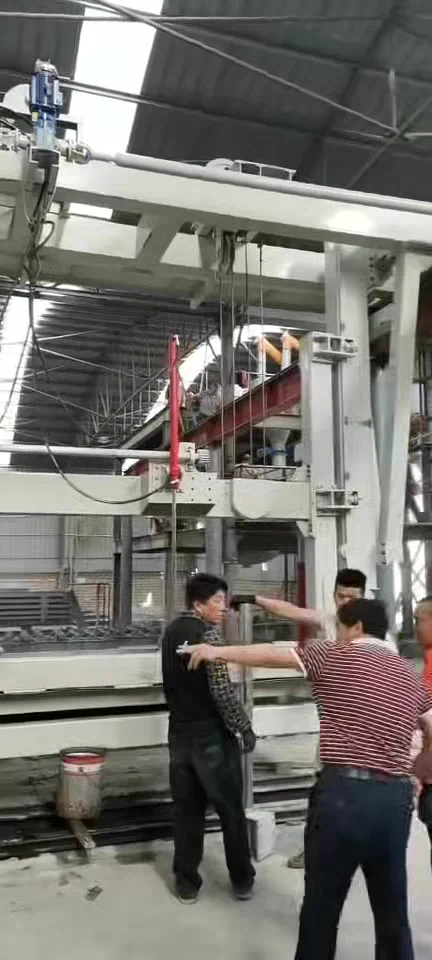
When a project may produce both AAC blocks and panels, the layout should identify which areas can be shared and which areas need separate handling. Raw-material preparation and some upstream process equipment may support a common concept, while product forming, reinforcement-related work, lifting, storage and dispatch may require dedicated arrangements. The dedicated AAC plant layout page provides a useful starting point for comparing land flow and equipment positioning before a detailed proposal is prepared.
Future flexibility does not mean installing every possible machine on day one. It means reserving practical space, access and utility routes for a later stage. For example, the investor may start with blocks and leave a planned area for panel-related equipment after market demand is confirmed. This approach can reduce the risk of an oversized first investment while protecting the site’s long-term development path.
For a project centered on panels, the layout should pay close attention to product dimensions, lifting methods, curing movement, storage protection and vehicle loading. For a block-focused project, the emphasis may be on stable cutting, efficient handling, packing and dispatch. The final arrangement should be based on the product specification and the sales plan rather than on a generic factory template.
Reserve space for utilities, maintenance and people
Utilities are often drawn as notes on the side of a project plan, but they should be coordinated with the equipment layout. Electricity, water, steam or fuel systems, drainage, ventilation, lighting and control cables all need practical routes. When utility paths are considered early, the project team can reduce later conflicts with cranes, rails, doors and maintenance platforms.
Maintenance space is equally important. A machine may fit inside a building and still be difficult to service if there is no room to remove a motor, open a panel, move a replacement part or position a lifting device. A good layout includes access around critical equipment and keeps emergency routes clear.
People should also be considered as part of the flow. Operators need to reach control points quickly. Maintenance teams need safe access to service areas. Visitors and managers should be able to view the process without walking through active transfer routes. Clear separation between people, forklifts, cranes and rail vehicles improves both safety and daily management.
Consider construction, commissioning and expansion together
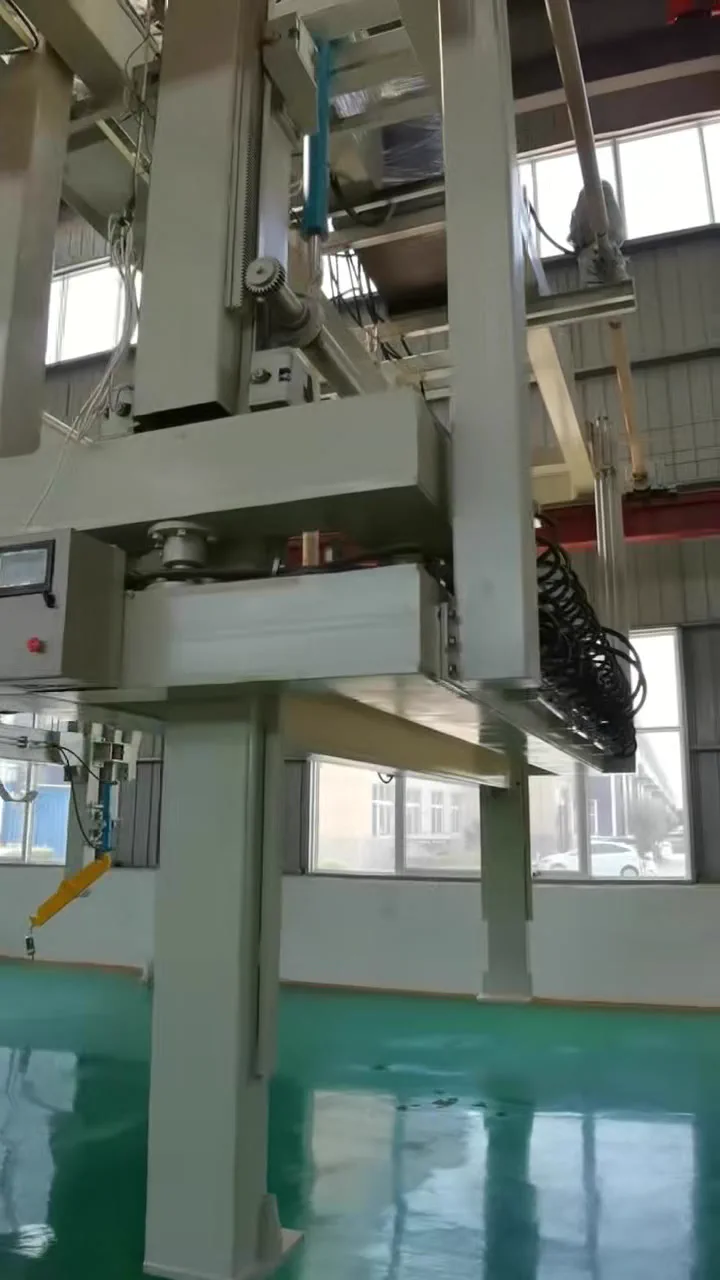
A layout is useful only when it can be built and operated. Before construction, the project team should review building clear height, column positions, floor levels, foundation loads, equipment delivery routes, crane installation and access for large components. The review should include the sequence of civil works, equipment installation and commissioning.
For overseas customers, installation coordination is especially important. Local contractors may complete foundations and building works while the equipment supplier provides technical documents, installation guidance, testing and commissioning support. The earlier these responsibilities are defined, the easier it is to protect the schedule and avoid unclear interfaces.
Expansion planning should be realistic. A reserved area is valuable only if it has practical access and can be connected to future utilities and material flow. HUAZHU can evaluate the proposed land and capacity plan to help determine whether the first phase should focus on an AAC block production line, an AAC panel production line or a staged solution.
How HUAZHU supports an AAC plant investment project
HUAZHU Machinery supplies AAC production line solutions for blocks and panels, with project capacity discussions ranging from 50,000 to 500,000 m³ per year. The final configuration is selected according to the product, capacity, raw materials, land and local project conditions.
Support can cover equipment manufacturing, process coordination, layout planning, installation guidance, commissioning and after-sales service. The practical objective is to connect the equipment list with the investor’s actual site and business plan. A quotation without a workable layout may leave important civil, utility and logistics questions unanswered.
Before requesting a proposal, prepare your country, expected annual capacity, block or panel requirement, available raw materials, land dimensions and known utility conditions. These details allow the technical team to make the first layout discussion more useful and reduce unnecessary revisions.
Planning a new AAC factory in Kazakhstan, Russia, Central Asia, Southeast Asia or Africa? Send your project information to HUAZHU through the Contact Us page or start a WhatsApp discussion using +86 138 3825 5450. Please include your country, plan capacity, raw materials, factory area and project requirements.
HUAZHU can help develop the AAC production line concept, manufacture the equipment, provide installation guidance, support commissioning and continue with after-sales service as the project moves into operation.