Henan Zhonglian Huazhu Machinery Equipment Co., Ltd.
For many investors, the design discussion about an AAC block production line ends at cutting and autoclaving. That is too early. After the autoclave cycle, finished AAC blocks still have to be unloaded, separated where required, transferred between stations, grouped into stable stacks, moved to packaging or storage, and prepared for dispatch. If this downstream section is treated as an afterthought, it can restrict the output of an otherwise well-configured plant.
A practical AAC finished block handling system connects production capacity, product dimensions, factory layout, labor availability and the required level of automation. It should be considered together with the complete AAC production line, not purchased as a disconnected group of machines. This guide explains the main planning points for investors comparing equipment for projects in Central Asia, Russia, Southeast Asia, Africa and other growing AAC markets.
Why Finished-Product Handling Matters in an AAC Block Plant
An AAC factory is a linked process. Raw-material preparation, batching, pouring, pre-curing, cutting, autoclaving and finished-product movement depend on one another. The nominal capacity of an individual machine does not guarantee the annual output of the complete plant. If cured products wait too long for unloading, transfer or packaging, the delay can influence autoclave circulation, trolley availability and the rhythm of upstream production.
Downstream handling also affects product quality. AAC blocks are relatively light, but the edges and surfaces still require controlled contact. The handling method should support complete stacks without excessive pressure, sudden impact or unnecessary manual re-stacking. Equipment selection therefore needs to consider block strength after curing, package size, clamping position, surface protection and the route to finished-product storage.
For overseas investors, the handling section has another important role: it determines how much routine labor is needed after production. A compact project with lower output may use a simpler configuration, while a larger plant may require coordinated clamps, conveyors, rail-guided transfer equipment and automatic packaging. The correct solution is the one that matches the actual project conditions rather than the most complicated option on a quotation.
Start with the Required Product Flow
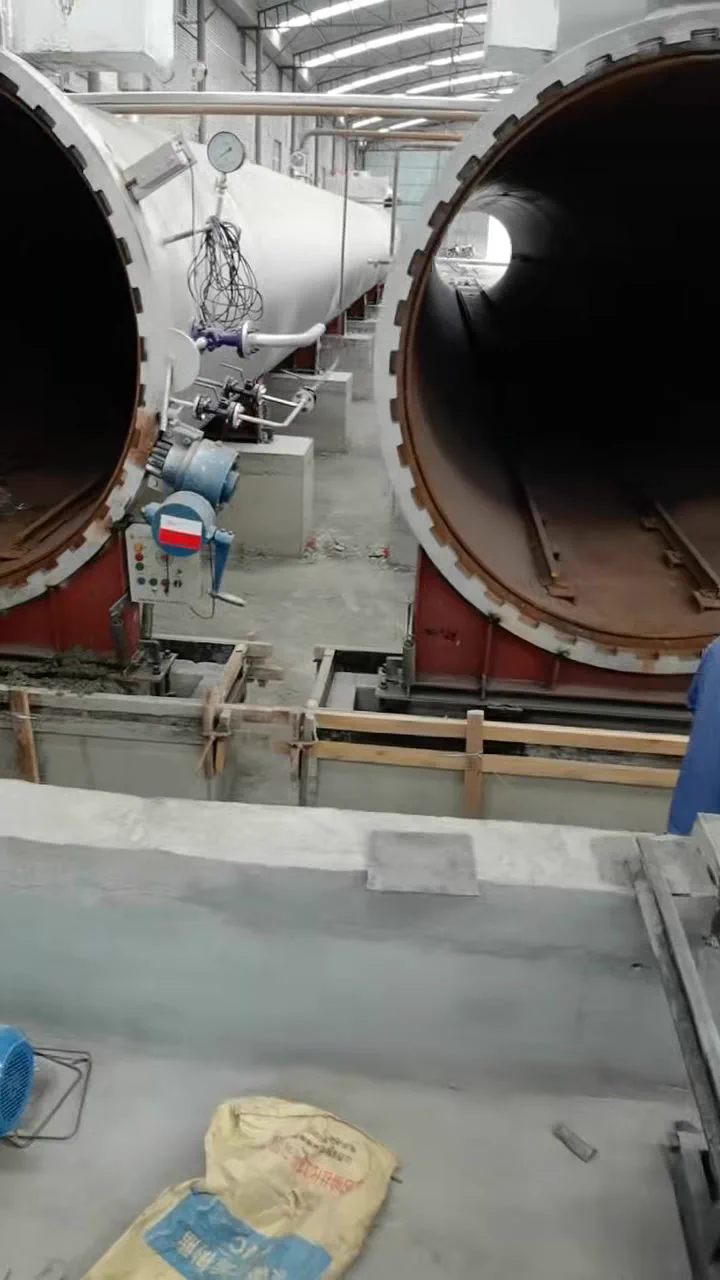
Before selecting an AAC block clamp or packaging line, map the complete route from autoclave exit to warehouse or loading area. The route should identify each transfer point, temporary waiting position and change in stack orientation. It should also show where operators need access for inspection, cleaning and maintenance.
A useful planning sequence is:
- Confirm how curing carts and side plates leave the autoclave section.
- Define where finished blocks are unloaded or separated.
- Determine the required stack dimensions and package format.
- Choose the transfer method between working stations.
- Reserve space for strapping, wrapping or pallet-free packaging if included.
- Plan forklift, truck or warehouse access without crossing unsafe machine zones.
- Provide buffer positions so one short interruption does not stop the entire line.
This flow should be checked against the overall AAC plant layout. Equipment drawings alone are not enough. Rail routes, column positions, doors, foundations, drainage, cable routing and lifting clearances all influence whether the handling equipment can operate efficiently after installation.
Main Equipment in an AAC Finished Block Handling System
The exact machine list varies by capacity and automation level, but several equipment groups are commonly evaluated.
Block Clamping and Lifting Equipment
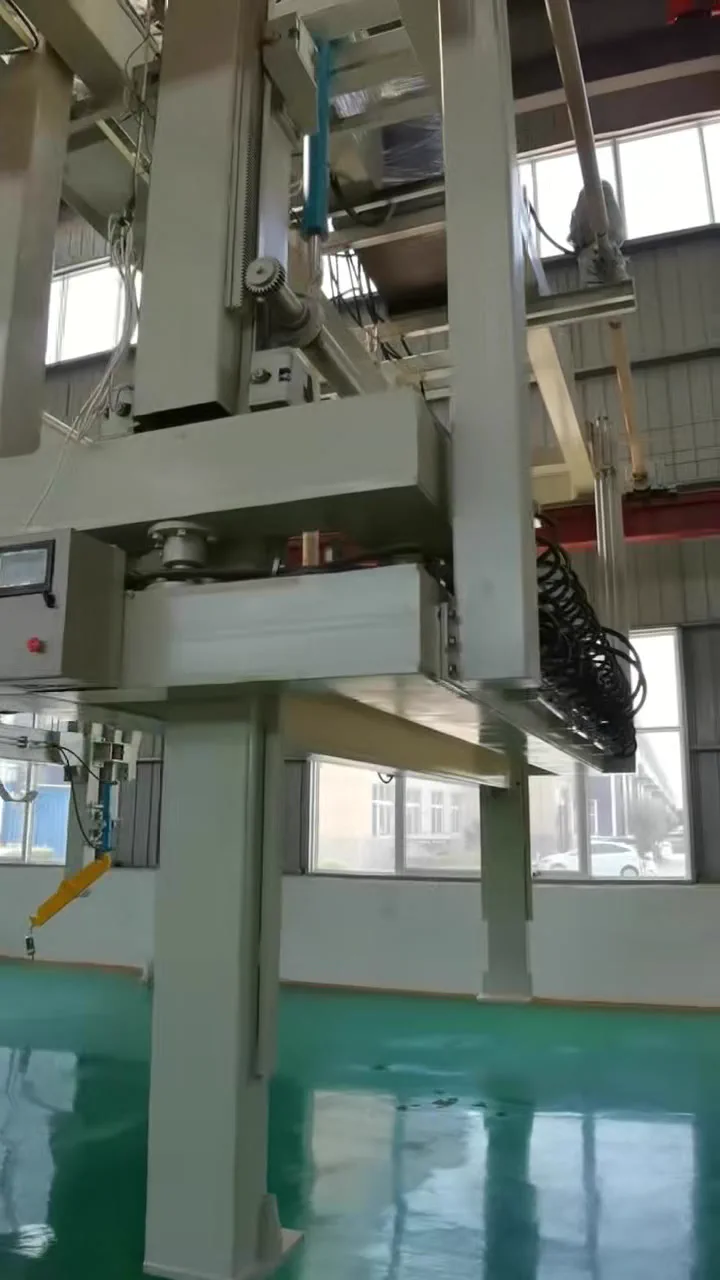
A block clamp moves a complete group of cured AAC products between stations. Its clamping range and control logic should match the block dimensions and stack arrangement. The contact surfaces need to distribute force consistently. Lifting travel, operating speed and positioning accuracy should be coordinated with the receiving conveyor, trolley or packaging station.
Investors should ask how the clamp responds to different product sizes, how pressure is controlled and what access is provided for wear-part inspection. A reliable configuration should also include appropriate interlocks and clearly defined operating zones. Increasing speed without checking stack stability or receiving-station timing does not necessarily increase plant output.
Rail-Guided Transfer and Station Movement
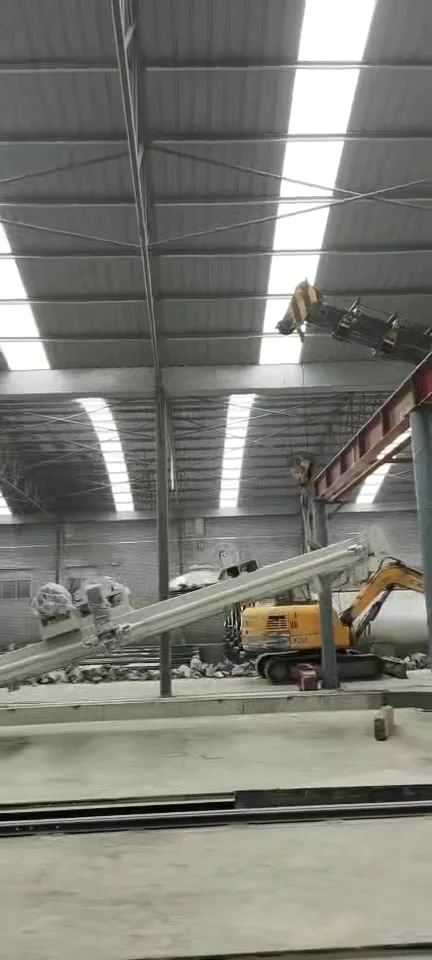
Rail-guided transfer equipment can create a predictable route between the autoclave, unloading, packaging and storage interfaces. It is especially useful where heavy stacks must follow a fixed path and where repeated forklift movement would create congestion. The rail system, trolley size and drive arrangement need to be included early in civil and foundation design.
The transfer route should avoid unnecessary turns and crossing points. Maintenance access must remain available on both sides where possible. For cold regions such as Kazakhstan and Russia, investors should also consider whether finished-product movement and storage are fully enclosed and how doors, snow, dust and temperature conditions may affect the operating area.
Conveyors, Turning and Grouping Stations
Depending on the product and package format, the downstream line may require conveying, turning, grouping or stack-adjustment stations. These stations should maintain a consistent flow while minimizing direct product impact. Sensor locations and control sequences need to reflect actual block dimensions, not only the maximum theoretical size.
When a plant will produce several block specifications, changeover requirements should be discussed before ordering. The investor should know which adjustments are automatic, which are manual, how long a normal changeover takes and whether a different stack arrangement changes the packaging method.
Packaging and Dispatch Preparation
Packaging requirements differ by market. Some projects deliver blocks locally with a simple strapped stack, while others need wrapping, corner protection or another method suitable for longer transport. Pallet-free packaging may reduce pallet management, but the complete logistics route must support the resulting package from factory to customer.
The packaging specification should be based on transport distance, road conditions, unloading method, weather exposure and customer expectations. It is also important to reserve enough finished-product buffer space. A packaging machine cannot compensate for a warehouse route that is too narrow or a truck-loading area that interrupts production.
How to Choose the Right Automation Level
Automation should solve a defined production or labor problem. A larger AAC block plant usually benefits from more coordinated downstream control because the number of cycles and product movements is higher. However, annual capacity is only one factor. The business case also depends on local wages, operator skills, spare-parts availability, maintenance capability and the number of product specifications.
Investors can compare three broad approaches:
- Basic handling: suitable for lower-output projects where labor is available and the product range is simple. The equipment scope is smaller, but routine manual work and forklift coordination are greater.
- Semi-automatic handling: combines dedicated lifting or transfer equipment with operator-controlled movements. This can improve consistency without requiring every downstream station to be fully integrated.
- Integrated automatic handling: connects clamps, transfer systems, conveyors and packaging through coordinated control. It is appropriate when output, labor reduction and repeatable product flow justify the investment.
The comparison should be made on total project performance, not only the purchase price of one machine. The AAC plant investment plan should include foundations, electrical control, installation, commissioning, operator training, routine spare parts and the effect of the selected automation level on labor and warehouse operation.
Capacity Matching: Avoid Creating a Downstream Bottleneck
Every important station needs enough practical throughput for the planned production rhythm. The calculation should include cycle time, travel distance, lifting and lowering, alignment, safety interlocks, normal operator response and small production variations. A machine's fastest movement is not the same as sustainable plant capacity.
Buffer positions are useful between major stages. They allow upstream equipment to continue briefly when a downstream station pauses for package replacement, inspection or routine adjustment. Too little buffer creates frequent line stops; too much buffer consumes factory space and increases work in process. The correct balance comes from a line-wide cycle analysis.
Block and panel projects require separate attention. AAC panels may need reinforcement-related processes, different support methods and additional surface protection. A factory planning both products should define which downstream equipment can be shared and which stations require a dedicated route. This prevents a future panel expansion from disrupting established block production.
Layout and Civil-Work Checks Before Equipment Ordering
Finished-product handling is closely connected to building design. Before foundations are finalized, the equipment supplier and plant designer should review:
- Rail centerlines, pit dimensions and foundation loads.
- Clear height for clamps, lifting frames and maintenance work.
- Column spacing and interference with moving equipment.
- Safe separation between operators, forklifts and automatic stations.
- Electrical cabinet locations, cable trays and sensor protection.
- Warehouse capacity and truck-loading circulation.
- Future expansion space for packaging or panel production.
A layout review can identify expensive conflicts before construction. For example, changing a rail centerline on a drawing is simple; moving a completed foundation is not. Investors should therefore provide land dimensions, workshop drawings and the intended logistics route early in project discussions.
Control, Safety and Maintenance Planning
Automatic handling equipment needs more than a motor and a start button. Sensors, position confirmation, emergency stops, access protection and operating logic should work as a coordinated system. Safety fencing and interlocked access points must be designed around actual maintenance tasks rather than added after the line is installed.
Maintenance planning should include accessible lubrication points, replaceable wear parts, inspection space and clear fault information. Operators need training on normal sequence recovery so that a small interruption does not lead to unsafe manual intervention. A recommended spare-parts list should reflect components that are critical to continued operation and components that experience predictable wear.
Remote technical support can help diagnose control issues, but it does not replace good on-site maintenance. The investor should assign responsible electrical and mechanical personnel and keep equipment documentation available in the plant.
Information Needed for an Accurate Equipment Proposal
A useful quotation should be based on the real project. To prepare an AAC finished-product handling configuration, provide the following information:
- Project country and installation city.
- Required annual capacity in cubic metres.
- AAC blocks, AAC panels or both.
- Finished product dimensions and expected product mix.
- Available raw materials and the planned process route.
- Land dimensions and existing or planned workshop drawings.
- Preferred automation and packaging level.
- Local power supply, labor conditions and dispatch method.
These details allow the supplier to connect machine selection with layout, cycle time and investment scope. A short machine list without this information may look attractive, but it cannot confirm whether the complete production line will operate as one system.
Plan the Handling System with the Complete AAC Plant
Finished-product handling is a small part of the process diagram but a major part of daily factory operation. The best time to design it is before the workshop and foundations are fixed. By matching clamping, transfer, grouping and packaging equipment to the required capacity and product route, investors can reduce unnecessary manual handling and protect the production rhythm of the complete plant.
Planning an AAC project? Contact HUAZHU through WhatsApp: +86 138 3825 5450 or use the Contact Us page. Send your country, planned capacity, raw materials, product dimensions, factory conditions and project requirements for a customized discussion.
HUAZHU can support AAC production-line solution design, equipment manufacturing, installation guidance, commissioning and after-sales service for block and panel projects.