 Henan Zhonglian Huazhu Machinery Equipment Co., Ltd.
Choosing the right AAC Production Line capacity is one of the most important decisions in an autoclaved aerated concrete project. A line that is too small may lose sales when demand grows, while an oversized plant can tie up capital, raise fixed costs and operate inefficiently. The correct capacity is not simply the largest figure a budget can purchase. It is the output level that matches proven market demand, available raw materials, land, utilities, product mix, labor and the investor's expansion plan.
HUAZHU designs complete AAC production line solutions from 50,000 to 500,000 m³/year. This guide explains how investors can compare those capacity levels and prepare the information needed for a practical plant configuration.
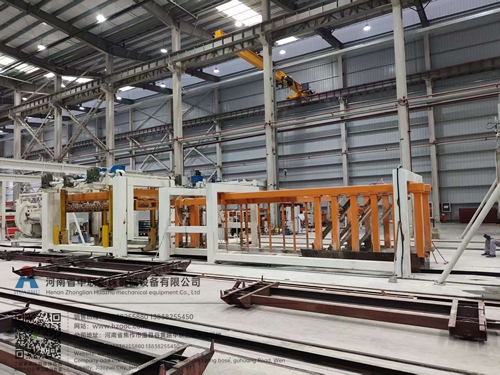
1. Why AAC Plant Capacity Must Be Selected Carefully
AAC plant capacity affects almost every part of the project: equipment quantity, autoclave number, boiler size, electrical load, factory layout, storage area, staffing, construction schedule and working capital. Capacity also determines how quickly an investor can respond to distributors and large building projects.
However, nameplate capacity is only a planning target. Actual saleable output depends on annual operating days, shift arrangement, block or panel specifications, raw-material stability, maintenance, mold cycle, cutting efficiency and autoclave utilization. A responsible supplier therefore starts with the investor's business conditions before proposing machinery.
2. Convert Annual Capacity into Daily Output
Annual capacity is easier to understand when converted into daily production. The table below uses approximately 300 operating days per year. It is an indicative planning reference, not a guaranteed production promise.
| Annual Capacity | Approx. Daily Output | Typical Positioning | Common Project Situation |
|---|---|---|---|
| 50,000 m³/year | About 167 m³/day | Entry-scale commercial plant | Developing local market or limited initial budget |
| 100,000 m³/year | About 333 m³/day | Small-to-medium regional plant | Stable block demand in one city or province |
| 200,000 m³/year | About 667 m³/day | Medium commercial plant | Multiple distributors and regular project supply |
| 300,000 m³/year | About 1,000 m³/day | Large regional plant | Strong demand, broad sales network or panels included |
| 500,000 m³/year | About 1,667 m³/day | Large industrial AAC base | Mature market, large contracts and high automation |
The daily figure should then be checked against planned shifts and autoclave cycles. For example, two projects with the same annual target may need different configurations if one produces only standard blocks and the other produces both blocks and reinforced panels.
3. Start with Verified Market Demand
The first capacity question is not “How large a plant can we build?” but “How much AAC can we sell at a sustainable price?” Investors should study current wall-material consumption, building permits, major contractors, government energy-efficiency policies, competing block factories, transport radius and distributor interest.
A useful demand forecast separates secured demand, probable demand and aspirational demand. Signed supply agreements and active distributor orders deserve more weight than general market optimism. Capacity should normally be supported by a realistic sales plan for the first two to three operating years.
- 50,000–100,000 m³/year: often suitable when a market is being developed or the investor wants to control initial risk.
- 200,000–300,000 m³/year: better suited to an established regional network with recurring project orders.
- 500,000 m³/year: normally requires mature demand, strong logistics and professional production management.
4. Confirm Raw Materials Before Finalizing Capacity
AAC production commonly uses fly ash or silica sand as the siliceous material, together with cement, lime, gypsum, aluminum powder or paste, and process water. Their chemistry, fineness, moisture and consistency affect recipe design, slurry preparation, cake strength and curing performance.
A larger plant consumes more material every day and therefore requires a reliable supply chain. Laboratory analysis should confirm whether local raw materials can support the target product density and strength. The supplier should also review storage days, unloading methods, grinding requirements and seasonal changes. Building a high-capacity line before confirming raw-material availability creates unnecessary operating risk.
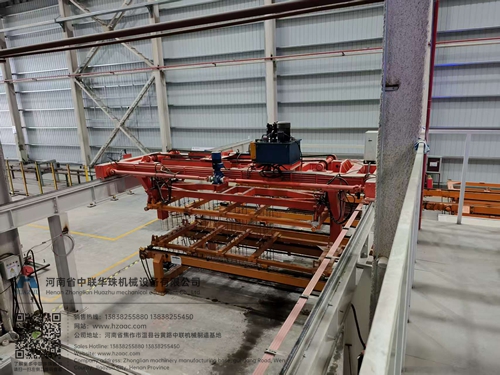
5. Match Land and Building Space to the Production Target
Plant capacity influences the size of raw-material storage, preparation workshops, casting and pre-curing areas, cutting section, autoclave area, finished-product yard, laboratory, maintenance space and internal roads. A compact layout can reduce handling distance, but it must still provide safe access, maintenance clearance and a logical material flow.
Investors should provide an accurate land drawing with dimensions, road entrances, direction, elevation differences and utility connection points. The layout must also reserve space for drainage, dust collection, steam condensate recovery and future expansion. A low-cost plot is not economical if its shape forces inefficient production flow.
For preliminary planning, HUAZHU evaluates the site together with the AAC Plant Layout, but final area requirements depend on storage policy, building codes, climate, automation and equipment arrangement.
6. Check Power, Steam, Water and Fuel Availability
AAC production relies on stable electricity for material preparation, conveying, mixing, cutting and packaging. High-pressure steam is essential for autoclave curing. Process water, compressed air and fuel supply must also be reliable. Before choosing a capacity, confirm the available transformer rating, fuel type, boiler conditions, water quality and local utility limits.
The steam system should be designed as part of the full production balance. Autoclave quantity and size, loading frequency, curing program, boiler capacity, pipelines, condensate recovery and insulation all influence efficiency. Oversizing one component while restricting another does not increase practical output.
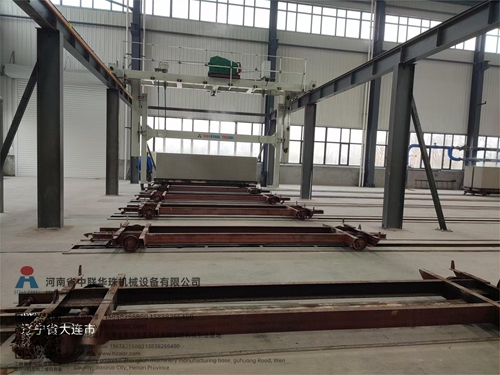
7. Decide the Required Automation Level
Automation should match labor cost, operator skill, product quality requirements and production scale. A smaller project may use more semi-automatic handling to reduce initial investment. A larger plant generally benefits from automated batching, mold circulation, cutting transfer, autoclave handling, separation and packaging because the volume of repeated operations is much higher.
More automation can improve consistency and reduce manual handling, but it also increases control-system complexity and demands better maintenance capability. The best solution is not the highest possible automation level. It is the level the factory can operate, maintain and expand reliably.
8. Consider Product Mix: Blocks, Panels or Both
A plant producing standard AAC blocks has different downstream requirements from a plant producing reinforced wall panels, floor panels or roof panels. Panel production may require reinforcement preparation, mesh welding, anti-corrosion treatment, cage assembly, insertion equipment, specialized handling and additional quality control.
Product size also changes cycle time and packaging. Investors should define the expected percentage of blocks and panels, density classes, strength grades and common dimensions before the line is finalized. If panels will be added later, the initial layout should reserve suitable space and interfaces.
9. Balance Investment Budget and Working Capital
The investment is more than machinery price. A complete budget should include civil construction, utilities, boiler and steam system, electrical installation, laboratory equipment, forklifts or loaders, spare parts, installation support, commissioning, training, raw-material inventory and working capital.
A higher-capacity line increases not only equipment investment but also inventory, energy consumption and sales pressure. Investors should compare capital expenditure with expected utilization and payback rather than comparing quotations only by total price. For a broader cost framework, read AAC Block Plant Cost: Complete Investment Guide.
10. Plan Expansion Before Construction Starts
When demand is expected to grow, phased development can be safer than installing the final maximum capacity immediately. Expansion planning may reserve land for additional autoclaves, another cutting line, larger material storage, extra silos, a second boiler or a panel section.
Phased expansion must be engineered in advance. Simply adding machines later may create bottlenecks in mixing, mold circulation, pre-curing, cutting or steam supply. The original plant layout and utility corridors should protect the intended growth path.
11. Capacity Selection Examples
Scenario A — Developing local market: An investor has access to suitable fly ash, expects gradual distributor growth and wants controlled initial investment. A 50,000 or 100,000 m³/year line with reserved expansion space may be appropriate.
Scenario B — Established regional supplier: The investor has several distributors, regular contractor demand and stable utilities. A 200,000 m³/year plant can offer a stronger balance between output, automation and commercial scale.
Scenario C — Large industrial project: The investor has confirmed regional demand, professional management, dependable raw materials and a strong logistics network. A 300,000–500,000 m³/year solution may be justified after detailed engineering.
These examples are not universal rules. Local selling prices, transport distance, construction season, product standards and financing conditions can change the result.
12. Information to Send an AAC Equipment Supplier
A technically useful quotation begins with complete project data. Send the following information before requesting a final configuration:
- Target annual or daily capacity and planned operating days.
- Block, panel or combined product mix, including dimensions and density.
- Raw-material types, laboratory reports and expected supply volumes.
- Land dimensions, site drawing and preferred workshop orientation.
- Available voltage, frequency, transformer capacity, water and fuel.
- Required automation level and local labor conditions.
- Target market, expected sales volume and expansion plan.
- Project country, applicable technical standards and delivery schedule.
This information allows the supplier to balance every process section. You can review the full sequence in AAC Block Production Process and Equipment List.
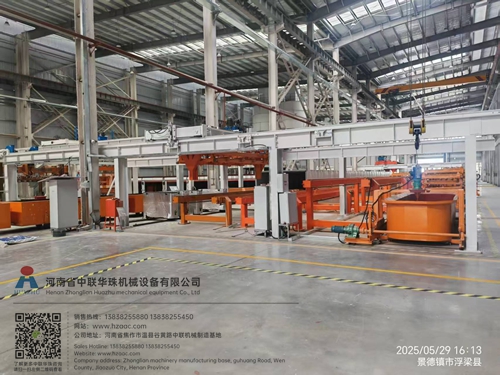
How HUAZHU Supports Capacity Planning
Henan Zhonglian Huazhu Machinery Equipment Co., Ltd. provides integrated solutions for AAC block and panel factories. Our service covers project consultation, plant planning, equipment design and manufacturing, installation guidance, commissioning, operator training and long-term after-sales support.
For projects in Kazakhstan, Russia, Central Asia, Southeast Asia, Africa and other markets, our engineers review local raw materials, climate, utilities, land and product demand before proposing the equipment configuration. The goal is a practical line that can reach stable production and remain maintainable throughout its service life.
Need a Capacity Recommendation for Your AAC Plant?
Send HUAZHU your target market, raw materials, land dimensions, product sizes and expected output. We will prepare a preliminary capacity recommendation and equipment configuration.
Frequently Asked Questions
1. What is the best AAC production line capacity for a new investor?
There is no single best size. A new investor should select capacity according to verified sales demand, raw-material supply, land, utilities, budget and management capability. A 50,000–100,000 m³/year line is often considered for developing markets, but every project requires individual evaluation.
2. How is annual AAC capacity converted into daily output?
Divide annual capacity by planned operating days. With 300 operating days, 100,000 m³/year is approximately 333 m³/day. Allow for maintenance, product changes, commissioning and normal operating variation.
3. Can an AAC plant be expanded later?
Yes, if expansion is considered during the first layout and utility design. Space, steam supply, electrical capacity, material preparation and mold circulation must be evaluated before reserving a second phase.
4. Does panel production require a different capacity design?
Yes. AAC panels require reinforcement preparation and specialized handling in addition to normal block processes. Product mix should be confirmed before equipment and workshop design.
5. How many operating days should be used for planning?
Many preliminary calculations use about 300 days per year, but the correct figure depends on local holidays, climate, maintenance policy, shift system and market seasonality.
6. Is a fully automatic line always better?
Not always. Automation should match capacity, labor cost, operator skill and maintenance capability. The objective is reliable quality and efficient production, not automation for its own sake.
7. Which raw materials must be tested?
The main siliceous material, lime, cement, gypsum and process water should be evaluated. The exact testing program depends on the proposed recipe and local material conditions.
8. What does HUAZHU need to prepare a quotation?
Please provide target capacity, product types and sizes, raw-material information, land dimensions, voltage and frequency, fuel conditions, desired automation and project location.
Conclusion
The right AAC production line capacity is the capacity the market can absorb and the factory can operate reliably. Start with demand and raw materials, then verify land, utilities, product mix, automation, investment and future expansion. When these factors are balanced, the project has a stronger foundation for stable production and long-term profitability.